


[Thank you Christy Articola for Surrender to the Flow and this post. -Ed.]
The Dicks Colorado 2024 issue of Surrender to the Flow is available here. This issue is FREE to download, but if you would like to pay something for it (donate), we will gladly accept!
This issue is full of good stuff for you! It includes information about Dick's Sporting Goods Park, things to do in Colorado in your free time, and our regular features like recipes, My First Show, My Favorite Jam Ever, 20 Years Later, Phish Changed My Life, Everybody Loves Statistics, Celebrations, fan fiction, a puzzle, and other things we think you'll enjoy.

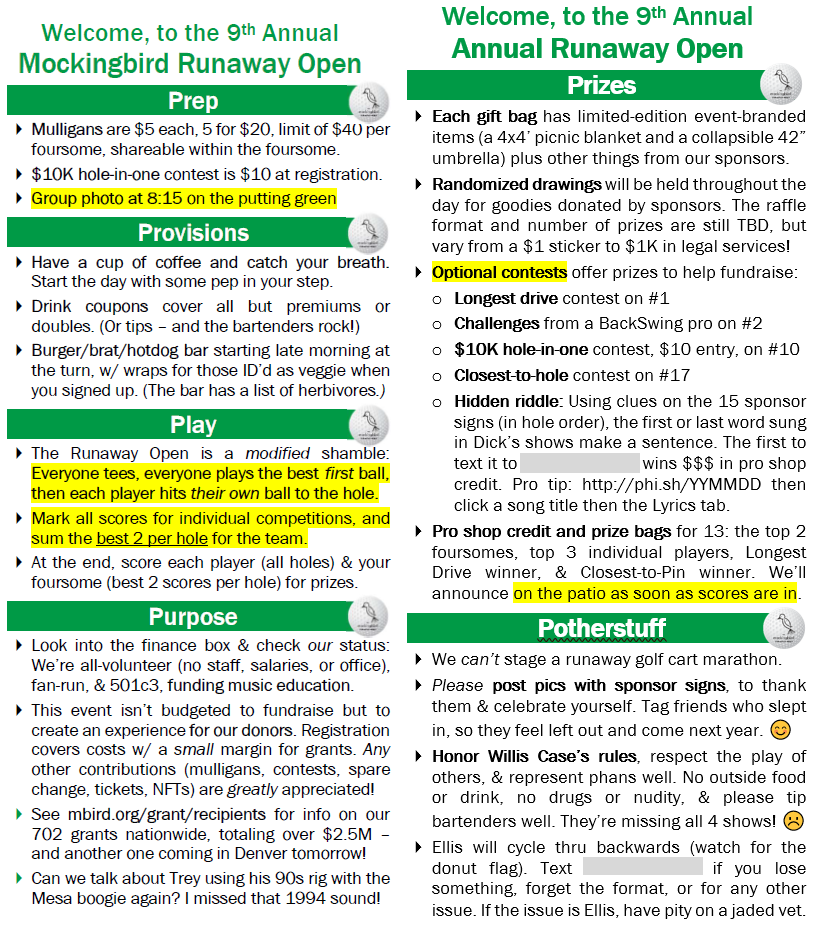 We're approaching the 9th Annual Runaway Open charity golf tournament for Phish fans in Denver. There are still spaces, but please register soon! If you won't be in Denver and/or don't golf, please share this link with anyone who will be and/or does: mbird.org/9RO. We want a full course of fans, swingin' sticks and raising funds for music education.
To whet your whistles, here's the info sheet that will go in each player's schwag bag (which will also include a 4'x4' Runaway Open picnic blanket, a 42" collapsible Runaway Open umbrella, and a host of prizes donated by our sponsors):
[We would like to thank Paul Jakus (@paulj) of the Dept. of Applied Economics at Utah State University for this summary of research presented at the 2024 Phish Studies Conference. -Ed.]
This is the fourth and final blogpost regarding the current rating system. Previous posts can be found here, here and here.
Post #2 showed how two metrics—average deviation and entropy—have been used by product marketers to identify anomalous raters; Post #3 showed how anomalous users may increase bias in the show rating. Many Phish.Net users have intuitively known that anomalous raters increase rating bias, and have suggested using a rating system similar to that used by rateyourmusic.com (RYM). RYM is an album rating aggregation website where registered users have provided nearly 137 million ratings of 6.2 million albums recorded by nearly 1.8 million artists (as of August 2024).
Similar to Phish.Net, RYM uses a five-point star rating scale but, unlike .Net, an album’s rating is not a simple average of all user ratings. Instead, RYM calculates a weighted average, where the most credible raters are given greater weight than less credible raters. Weights differ across raters on the basis of the number of albums they have rated and/or reviewed, the length of time since their last review, whether or not the reviewer provides only extreme ratings (lowest and/or highest scores), and how often they log onto the site, among other measures. These measures identify credible reviewers and separate them from what the site describes as possible “trolls”. Weights are not made public, and the exact details of the weighting system are left deliberately opaque so as to avoid strategic rating behavior.
[We would like to thank Paul Jakus (@paulj) of the Dept. of Applied Economics at Utah State University for this summary of research presented at the 2024 Phish Studies Conference. -Ed.]
The first two blogposts in this series can be found here and here. This post will address the statistical biases believed to be present in the data, and how anomalous raters may contribute to bias.
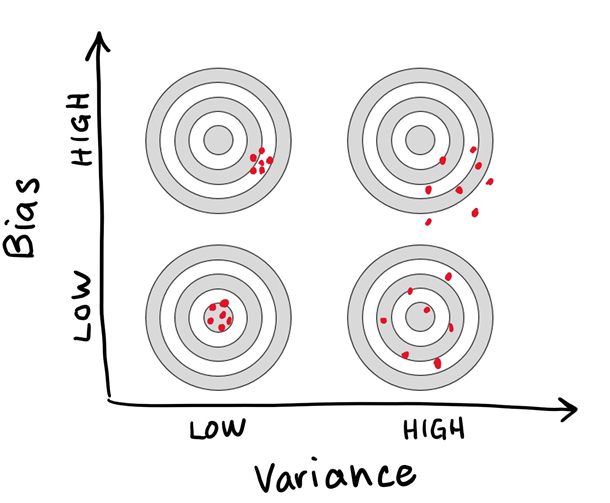
Statistically, a show rating represents our best point estimate of an unobservable theoretical construct: the “true” show rating. To the degree that an estimated show rating deviates from its true value, the error is composed of sampling variance and bias. In the figure below, think of the bullseye as the true show rating, and the red dots as our estimates (best guesses) of the true value.
[We would like to thank Paul Jakus (@paulj) of the Dept. of Applied Economics at Utah State University for this summary of research presented at the 2024 Phish Studies Conference. -Ed.]
Numerous Phish.Net Forum threads have hypothesized about the effect of people with extreme ratings behavior on show ratings, so this post will focus on the behavior of (anonymous) individual raters. The most well-known of extreme raters are “bombers”, or those who rate all shows as a ‘1’. “Fluffers”—those who rate every show a ‘5’—have received less attention than bombers.

 and then Add to Home Screen.